
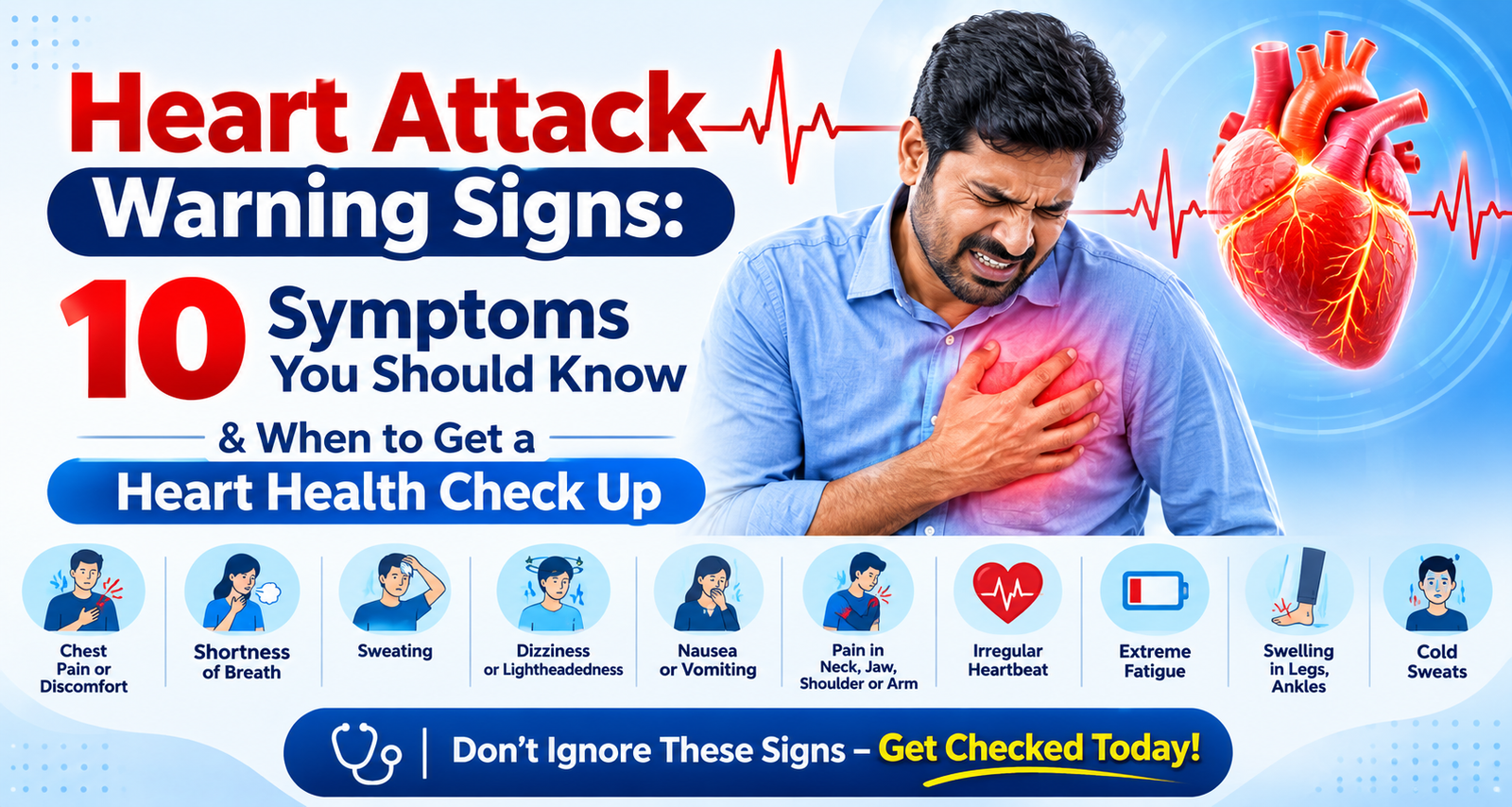
Heart Attack Warning Signs: 10 Symptoms You Should Know & When to Get a Heart Health Check Up
A heart attack can begin with obvious chest discomfort, but symptoms can vary from person to person. Knowing the warning signs can help you recognize a potentially serious problem and seek urgent medical care without unnecessary delay. Common warning signs include chest discomfort, discomfort in the upper body, shortness of breath, nausea, sweating, and lightheadedness.
This guide explains 10 symptoms you should know, when a heart health check up may be useful, and when you should seek emergency medical attention.
What Is a Heart Attack?
A heart attack occurs when blood flow to part of the heart muscle becomes blocked or severely reduced. Reduced blood flow can damage the heart muscle, which is why suspected heart attack symptoms should be treated as a medical emergency. The American Heart Association notes that rapid treatment can reduce heart damage and improve outcomes.
10 Heart Attack Warning Signs You Should Know
1. Chest pressure, squeezing, or discomfort
Many heart attacks involve discomfort in the center of the chest. It may feel like pressure, squeezing, fullness, tightness, or pain. It can last for several minutes or go away and return.
2. Pain or discomfort spreading to the arm or shoulder
Heart attack-related discomfort may spread to one or both arms or shoulders. It may occur with or without prominent chest discomfort.
3. Pain or discomfort in the back, neck or jaw
Pain or pressure may be felt in the back, neck or jaw rather than only in the chest. These symptoms should not be dismissed when they occur with other warning signs.
4. Shortness of breath
Shortness of breath can occur with or without chest discomfort. Sudden or unexplained breathing difficulty, especially when combined with other warning signs, requires prompt medical attention.
5. Nausea or vomiting
Nausea can accompany acute coronary syndrome and may be mistaken for a digestive problem. When nausea occurs with chest, upper-body, or breathing symptoms, seek urgent medical assessment.
6. Cold sweating
Breaking out in a cold sweat can be a warning sign of a heart attack, particularly when it occurs alongside chest discomfort, breathlessness or other symptoms.
7. Lightheadedness or dizziness
Feeling lightheaded or dizzy can occur during a heart attack. Do not ignore sudden or unexplained lightheadedness when it occurs with other warning signs.
8. Unusual fatigue or weakness
Some people may experience unusual tiredness or weakness. Less-recognized symptoms can be especially important when they are new, unexplained, or accompanied by other warning signs.
9. Rapid or irregular heartbeat or palpitations
A rapid or irregular heartbeat can occur with acute coronary syndrome. If palpitations occur with chest discomfort, shortness of breath, dizziness, or other concerning symptoms, seek urgent medical care.
10. Mild, unusual or hard-to-explain symptoms
Not every heart attack looks like severe crushing chest pain. Some heart attacks can have mild, unusual or unnoticed symptoms. Indigestion-like discomfort, unusual fatigue, breathlessness, nausea or mild pressure can sometimes be involved.
Heart Attack Symptoms in Women: Can They Be Different?
Chest discomfort remains an important warning sign, but women may also experience symptoms such as unusual fatigue, shortness of breath, nausea, and discomfort in the back, shoulder or jaw. Because these symptoms can resemble other conditions, new or unexplained symptoms should be discussed with a healthcare professional rather than automatically attributed to stress, indigestion or fatigue.
Can a Heart Attack Happen Without Severe Chest Pain?
Yes. Some heart attacks can be silent or have mild or unusual symptoms. The American Heart Association notes that silent heart attacks may be discovered only later through testing and can still cause heart damage. This is one reason persistent or unexplained symptoms should not be ignored.
When Should You Seek Emergency Medical Care?
Seek emergency medical help immediately if you develop symptoms that could indicate a heart attack, especially chest pressure or pain, shortness of breath, upper-body pain, sweating, nausea, dizziness or a combination of these symptoms. Do not wait for symptoms to become severe or assume they will pass. The American Heart Association recommends calling the local emergency number for suspected heart attack symptoms.
Heart Health Check Up: When Should You Consider One?
A heart health check up is not only for people who already have heart disease. Regular assessment can help identify cardiovascular risk factors such as high blood pressure, cholesterol abnormalities, blood glucose issues, smoking, excess weight, physical inactivity and family history. The American Heart Association recommends discussing screening frequency with a healthcare professional based on individual risk.
Depending on your history and symptoms, a clinician may consider measurements or tests such as blood pressure assessment, cholesterol and glucose testing, and—when clinically appropriate—an ECG or other cardiac investigations. Testing should be selected by a qualified healthcare professional based on the person’s symptoms and risk profile.
When Should You See a Cardiologist?
- You have recurring or unexplained chest discomfort.
- You experience shortness of breath, palpitations, dizziness or unusual fatigue that is new or persistent.
- You have known high blood pressure, high cholesterol, diabetes or another cardiovascular risk factor and need medical assessment.
- You have a personal or family history of heart disease and want to discuss cardiovascular risk.
- A physician recommends specialist cardiac evaluation or testing.
Cardiology Care at Devarsh Hospitals in Kakinada District
Devarsh Hospitals in Prathipadu, Kakinada District, provides cardiology care as part of its multi-specialty hospital services. The hospital lists Dr. T.V. Rao, MD, DM (Cardiology), as a Consultant Interventional Cardiologist.
His listed areas of expertise include coronary angiography and angioplasty (PTCA), heart attack and chest pain management, pacemaker and device implantation, hypertension and heart failure treatment, valvular and structural heart disease, and preventive cardiology and risk assessment.
For people researching the best hospitals in Kakinada, it is useful to compare relevant factors such as the availability of the required specialty, doctor expertise, emergency access, diagnostic facilities and whether the hospital can meet the patient’s specific care needs.
Why Early Attention to Heart Symptoms Matters
Heart attack symptoms can vary and may sometimes be mild or intermittent. Delaying evaluation because symptoms seem manageable can be risky. If symptoms suggest a possible heart attack, urgent medical assessment is more important than trying to determine the exact cause at home.
How to Support Long-Term Heart Health
- Monitor blood pressure regularly as advised by your healthcare professional.
- Discuss cholesterol and blood glucose screening based on your age and risk factors.
- Avoid smoking and exposure to second-hand smoke.
- Stay physically active according to your health professional’s advice.
- Follow a balanced eating pattern and discuss dietary changes with a qualified professional when needed.
- Maintain a healthy weight where appropriate.
- Take prescribed medicines as directed and attend recommended follow-up visits.
- Ask your healthcare professional how often you need a heart health check up based on your individual risk.
Frequently Asked Questions (FAQs)
1. What are the most common heart attack warning signs?
Common warning signs include chest pressure or discomfort, pain or discomfort in the arms or other upper-body areas, shortness of breath, nausea, cold sweating, and lightheadedness. Symptoms can vary between people.
2. Can heart attack symptoms be mild?
Yes. Some heart attacks can cause mild or unusual symptoms, and some can be silent. Mild symptoms should not be assumed to be harmless when they are new or unexplained.
3. When should I get a heart health check up?
The appropriate timing depends on your age, health history and cardiovascular risk factors. A healthcare professional can recommend screening based on factors such as blood pressure, cholesterol, blood glucose, smoking, weight, family history and existing cardiovascular disease.
4. Should I see a cardiologist for recurring chest discomfort?
Recurring or unexplained chest discomfort warrants medical assessment. If the symptoms are sudden, severe or suggest a heart attack, seek emergency care rather than waiting for a routine appointment.
5. Is a heart attack the same as cardiac arrest?
No. A heart attack occurs when blood flow to part of the heart muscle is blocked or severely reduced. Cardiac arrest occurs when the heart suddenly stops pumping effectively because of an electrical problem. A heart attack can sometimes trigger cardiac arrest, but they are different conditions.
6. Does Devarsh Hospitals provide cardiology care?
Devarsh Hospitals lists Cardiology among its specialties and lists Dr. T.V. Rao, MD, DM (Cardiology), as a Consultant Interventional Cardiologist. The hospital website also lists 24/7 ambulance services. Confirm current services and emergency availability directly with the hospital.
Book / Contact for Cardiology Consultation
For a non-emergency cardiology consultation or heart health assessment, contact Devarsh Hospitals to confirm the current consultation schedule and availability.
Devarsh Hospitals — Fire Station Road, Near Vinayaka Temple, Prathipadu, Kakinada District, Andhra Pradesh 533432 Phone: +91 91546 56888 | +91 76609 07108 Website: https://www.devarshhospitals.com/